
Recruiters often begin competitor research with a list of companies that sell similar products or services. That list may be useful for business planning, but it does not always show who is competing for the same employees.
A bank, retailer, and software company may all be looking for data engineers. A hospital and hotel may compete for people with customer service and scheduling experience. Local employers from unrelated industries may be recruiting from the same pool of administrative staff, drivers or finance professionals.
Recruitment competition is therefore specific to the job, skills, location and working conditions. Understanding it can help an employer improve a job advert, decide where to look for candidates and address the reasons people withdraw or reject an offer. It should not become an exercise in copying other employers or collecting confidential information.
Your Business Rivals May Not Be Your Talent Rivals
A business competitor sells to the same customers. A talent competitor tries to hire or retain the same type of worker. Some companies fall into both groups, but many do not.
The distinction becomes clearer when the analysis starts with a particular role. For a cybersecurity vacancy, the relevant competitors might include banks, technology companies, consultancies, government departments and large retailers. For a warehouse position, location, shift pattern and transport access may matter more than the employer’s industry.
U.S. competition authorities make the same distinction in a legal context. Their 2025 antitrust guidelines for activities affecting workers explain that businesses can compete for workers even when they offer different products or services. The example in the guidance is an aircraft manufacturer and a parts supplier recruiting engineers from the same labor market.
This means a single company-wide competitor list will rarely be enough. The list may change by:
- Job family and level of seniority
- Required skills, licenses or experience
- Work location and commuting area
- Remote, hybrid or on-site arrangements
- Permanent, temporary or contract employment
- Shift pattern and working hours
- Pay, benefits and career opportunities
A multinational employer may face different recruitment competition for the same job in two cities. A fully remote role may have a much wider field of competitors than an on-site vacancy.
Define the Job Before Studying Other Employers
Competitor research cannot correct a poorly defined vacancy. Before reviewing other job adverts, the recruiter and hiring manager need to agree on what the employee will actually do and which requirements are necessary.
Start with the work rather than the existing job title. Titles vary between employers. A customer success manager may perform work similar to an account manager or client services manager elsewhere. Searching only one title can hide relevant employers and candidates.
The role brief should identify:
- The main responsibilities and expected results
- Essential skills, qualifications or licenses
- Experience that is helpful but not mandatory
- Reporting relationships and decision-making authority
- Location, schedule, travel and work arrangement
- Employment type and expected start date
- Approved pay and benefits information
Occupational resources can help teams check whether they are using familiar titles and realistic requirements. In the United States, O*NET OnLine provides descriptions, reported job titles, tasks, skills, and training information across occupations. Employers elsewhere should use the equivalent national or regional labor-market sources rather than assume that one country’s titles or qualification standards apply everywhere.
This review may expose the real hiring problem. A role described as entry-level may demand several years of experience. A long list of preferred skills may have been presented as mandatory. The location or schedule may sharply reduce the available candidate pool. These problems should be corrected before the employer compares itself with anyone else.
Your Hiring Records Can Reveal the Real Competition
Public research is useful, but an employer’s own recruitment history often provides stronger evidence. Look at recent vacancies in the same job family and examine where candidates entered and left the process.
Useful questions include:
- Which employers did successful candidates previously work for?
- Which organizations hired employees who recently left?
- At what stage did suitable candidates withdraw?
- Which offer terms caused concern?
- Which sourcing channels produced candidates who reached the interview stage?
- Did location, working hours, or the application process affect participation?
- How long did candidates wait for feedback or a decision?
Offer-decline and withdrawal reasons need to be recorded carefully. Broad labels such as “not interested” explain very little. More useful categories might include accepted another offer, pay, work arrangement, location, job scope, timing, personal circumstances, or no reason provided.
Do not force every decision into one category. A person might accept another job because it offered better progression, a shorter journey, and a faster decision. Recruiters should also leave room for candidates who do not want to explain their choice.
The information will only be useful if records are current. If recruiters forget to close withdrawn applications or choose the quickest reason from a list, the report may create a false picture of the competition.
Build a Short Competitor List From Public Evidence
Once the role and internal evidence are clear, create a manageable list of employers that appear to recruit from the same talent pool. The aim is not to monitor every organization. It is to understand the choices a suitable candidate is likely to compare.
Include three types of employer:
- Organizations that regularly advertise closely related roles
- Employers in other industries seeking the same transferable skills
- Local or remote employers offering a similar working arrangement.
Use several sources because each one shows only part of the picture.
| Current job adverts | Titles, stated duties, requirements, locations, work arrangements and advertised pay | Whether the vacancy remains active or the day-to-day job matches the advert |
| Careers pages and employer social channels | The employment message, benefits presented and application journey | How consistently employees experience those promises |
| Government and regional labor data | Occupational demand, common pay measures, employment levels and shortage information | The hiring position of one specific employer |
| Employee and candidate reviews | Repeated concerns or strengths worth investigating | A representative view of the entire workforce |
| The organization’s ATS | Candidate sources, stage movement, withdrawals and offer decisions | Accurate conclusions when recruiters have not updated the records |
Record the source and date for every important observation. Job adverts change, benefits are updated, and working arrangements may differ by role. A statement copied into a spreadsheet without a date can soon become misleading.
Publicly available information should still be handled responsibly. Follow the terms of the website being used, avoid collecting personal information without a defined purpose and do not build conclusions around one individual’s profile or review.
Compare What Candidates Are Actually Being Offered
Competitor analysis is often reduced to employer slogans. Statements about culture, innovation or people being the organization’s “greatest asset” reveal little unless they are supported by real employment practices.
Compare the parts of the opportunity that may affect a candidate’s decision:
- Work itself: Responsibilities, workload, authority and the problems the person will solve
- Reward: Salary or pay range where available, benefits, incentives and employment security
- Working conditions: Location, schedule, flexibility, travel and physical requirements
- Growth: Training, promotion routes, professional exposure and access to experienced colleagues
- Management: Reporting line, team structure and how performance is assessed
- Hiring experience: Application effort, interview stages, communication and decision time
- Purpose and values: What the organization does and whether its public commitments are supported by evidence
Not every employer can offer the highest pay, remote work or rapid promotion. The purpose of the comparison is to understand where the organization is genuinely competitive and where the role may be difficult to present attractively.
If a competitor offers higher pay, the answer is not to invent a more exciting advert. The employer may need to review the budget, adjust the requirements, offer a different work arrangement, strengthen development opportunities or accept that the vacancy will take longer to fill.
A Credible Employer Brand Starts With the Real Workplace
An employer brand is not simply a careers-page design or a set of recruitment messages. It is what current employees, former employees and candidates understand about the organization as a place to work.
The CIPD’s employer-brand guidance recommends connecting the employer brand with the organization’s values, people strategy and policies. It also warns that the message should reflect employees’ experience rather than repeat values that are not visible in practice.
Before changing the external message, ask employees what they value and what unnecessarily complicates their work. Review exit feedback, engagement findings and recurring candidate questions. Managers, recruiters and employees may describe the workplace differently; those gaps need attention.
Recruiters should be prepared to explain:
- What the role contributes
- How the team works and makes decisions
- What support a new employee receives
- What development looks like in practice
- Which aspects of the job are demanding
- What the employer can and cannot offer
This is more credible than training recruiters to “sell” the company. A clear and realistic description gives candidates a better basis for deciding whether to continue.
Strong Job Advertising Depends on Clarity, Not Imitation
Competitor job adverts can show how similar roles are described and where expectations differ. They should be used as evidence, not templates.
Look for repeated titles, skills and responsibilities, then check them against the actual vacancy. If several employers use a title that candidates recognize, an internal title may need a clearer external version. If competitors separate essential and preferred criteria, a long undivided list may make your role appear less accessible.
A useful advert should tell the reader:
- What the employee will do
- Which requirements are genuinely essential
- Where and when the work takes place
- What type of employment is offered
- What the hiring process is likely to involve
- How to request an adjustment or accommodation
- What pay or benefits information can or must be provided
Legal requirements for pay disclosure and job advertising vary by location. Employers should check the rules that apply to the role rather than copying the level of detail used by another company.
Publishing the vacancy across more job boards is not automatically a stronger approach. Channel choice should follow the role. A specialist vacancy, an early-career position and an hourly local job may require different sources and messages.
A Difficult Application Can Cancel Out Good Recruitment Marketing
A candidate may be interested in the job and still abandon the application if the form is difficult to use. Common problems include asking people to upload a resume and then retype the same history, requiring information that is not needed at the first stage, or presenting errors that do not explain how to continue.
Test the process on the devices candidates are likely to use. Check whether people can:
- Read the job information without excessive scrolling or zooming.
- Complete fields using a keyboard and assistive technology
- Understand which information is required.
- Correct an error without losing completed work.
- Upload common resume file types.
- Receive confirmation that the application was submitted.
The W3C’s guidance on accessible forms covers clear labels, instructions, validation, and user notifications. Mobile access and accessibility should be tested separately; a form that fits a smaller screen may still be difficult for a person using assistive technology.
Measure application starts and completions where the system supports it, but do not assume every incomplete application reflects poor design. A person may change their mind after reviewing the location, schedule, or requirements. Short feedback and device testing can help explain the number.
Interviews Should Explore Candidate Priorities, Not Competitor Secrets
Candidates can provide useful feedback on their job search, but an interview is not a competitor intelligence exercise. Asking someone to disclose another employer’s confidential information can damage trust and distract from assessing their suitability for the job.
Appropriate questions include:
- What interested you in this role?
- Which parts of the opportunity are most important to you?
- Is anything about the role or process unclear?
- What will influence your decision if you receive more than one offer?
If a candidate mentions another application, the recruiter can ask about the factors affecting the decision without demanding the company name, private pay details, or information about another employer’s selection process.
Employers should also keep competitor contact within legal boundaries. The U.S. Department of Justice and Federal Trade Commission warn that agreements between employers not to recruit or hire workers, to coordinate pay or to exchange competitively sensitive employment information may breach antitrust law. Rules differ across countries, so organizations operating elsewhere should seek advice for the relevant jurisdictions.
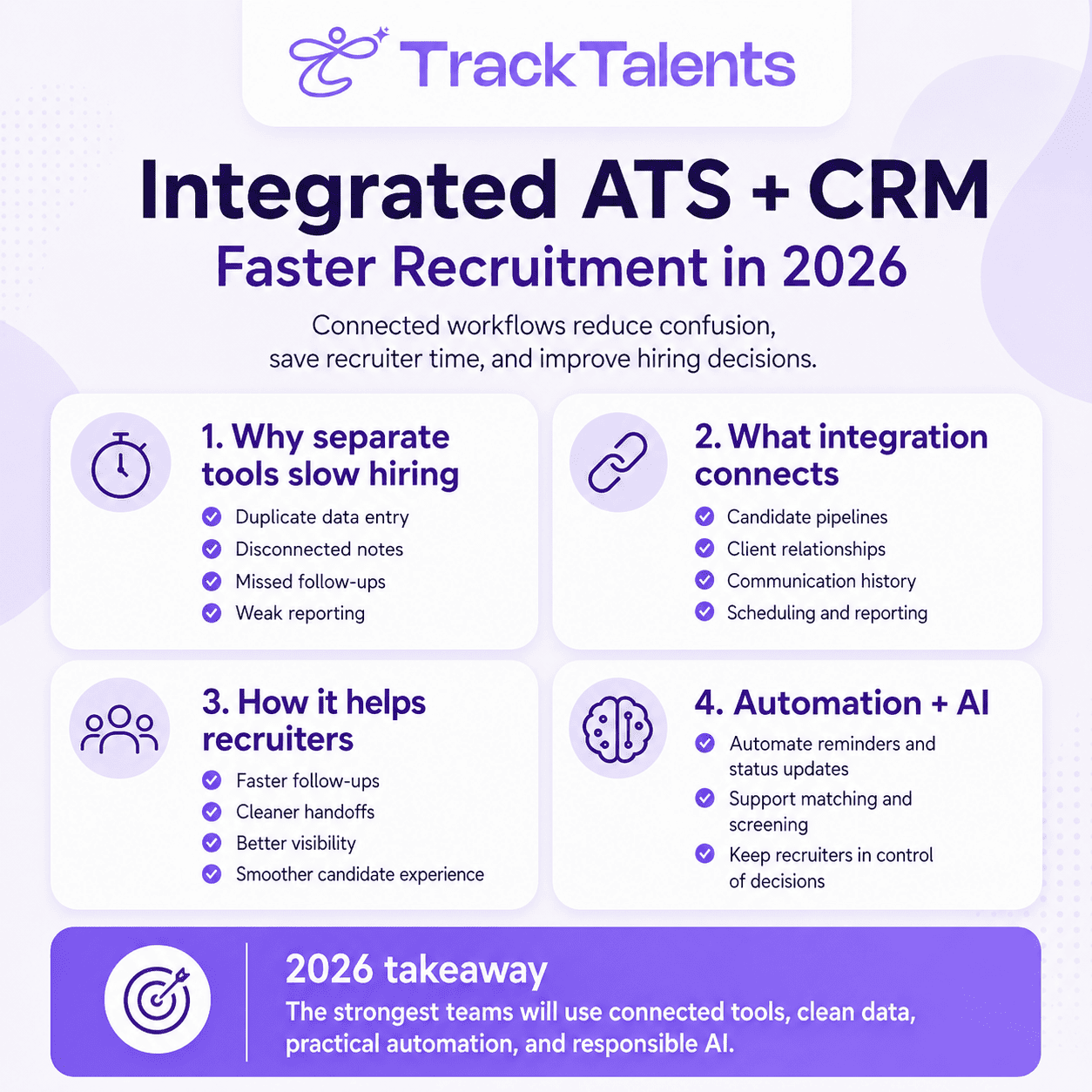
An ATS Can Organize the Evidence but Cannot Set the Strategy.
An applicant tracking system can keep jobs, applications, messages, interview records and decisions connected. It may also help recruiters record candidate sources, withdrawal reasons, offer outcomes and the time spent at each stage.
These records can show where the process is losing candidates, but the ATS cannot explain the cause on its own. A high withdrawal rate may reflect slow decisions, unsuitable sourcing, unclear job information, pay, location, or several factors at once. Recruiters still need to review individual cases and speak with candidates and hiring managers.
Reports also depend on consistent data entry. Teams should agree on stage definitions, source rules, and reasons for decline before comparing roles or time periods. Otherwise, different recruiters may use the same field in different ways.
Automation can support timely communication, but messages must respond to the correct status. An interview reminder sent after a candidate has withdrawn makes the process look careless rather than efficient.
Where TrackTalents Can Support the Process
TrackTalents is a platform that employers and staffing firms may consider when organizing recruitment activities. Its current feature list includes job creation and email import, posting to job boards, a career portal, resume extraction for PDF, TXT, DOCX, and DOC files, linked candidate and job records, email tracking,, and interview scheduling.
These functions can help a team keep recruitment work in one place. They do not identify talent competitors or decide how an employer should position a role. Buyers should test whether the platform captures the sources, withdrawal reasons, hiring stages, and reports required for their own analysis. They should also confirm integration, access, retention and support requirements before purchase.
Turn the Research Into One Measurable Hiring Change
Begin with one role that has been difficult to fill. Define the job accurately, identify the employers competing for the same people, and review why suitable candidates previously left the process. Then choose one problem the organization can genuinely change.
For example, the team might:
- Remove requirements that are not essential.
- Use a title candidates recognize
- Explain the schedule or work arrangement more clearly.
- Reduce repeated questions in the application.
- Set a deadline for interview feedback.
- Give candidates more useful updates.
- Review an offer that repeatedly loses candidates for the same reason.
Change one or two elements during the next comparable hiring cycle and examine what happens. Useful measures may include completed applications, qualified candidates, time awaiting feedback, withdrawals, and offer decisions. Interpret the numbers with the role’s difficulty and the quality of the records in mind.
The purpose of studying recruitment competition is not to copy the loudest employer. It is to understand the candidates’ choices, remove avoidable weaknesses, and present an employment offer that the organization can honestly deliver.